Breast augmentation in New York is a personalized surgical procedure designed to enhance breast volume, improve shape and projection, and create proportions that complement each patient’s natural anatomy. For patients considering breast implants in New York, choosing the right option involves more than selecting an implant size. During your consultation, Dr. Mahira Tanovic, a board-certified plastic surgeon serving Manhattan, New York City and Long Island, evaluates your breast anatomy, tissue coverage, implant options, lifestyle, and aesthetic goals to develop an individualized surgical plan.

What Is Breast Augmentation and How Do Breast Implants Work?
A breast augmentation procedure uses breast implants to increase or restore volume, improve projection, and enhance breast shape and proportion. Implant size, profile, fill material, placement, existing breast tissue, and skin quality all influence the surgical plan and final appearance, which is why breast augmentation should be customized to each patient’s anatomy and goals.
For patients considering breast augmentation in NYC, choosing the right implant involves much more than selecting a cup size. Implant width, projection, silicone or saline fill, pocket position, tissue coverage, and skin quality all affect the result. Dr. Tanovic uses these factors to plan breast augmentation around proportion, tissue support, and the patient’s desired outcome, with consultations available in Manhattan and Long Island.
Important distinction
Augmentation adds volume, but it does not reliably lift a nipple that sits low or remove substantial loose skin. When sagging is a primary concern, a breast lift-with or without implants-may be more appropriate.
Breast Augmentation Quick Facts
What Can Breast Augmentation Address?
Breast augmentation may be considered when a patient wants more volume, improved upper-breast fullness, or better balance between the two sides. It may restore volume that changed after pregnancy or weight loss, but it cannot stop future aging, pregnancy-related change, or weight fluctuation. Having one of these concerns does not automatically mean surgery is the right choice.
- Naturally small breast volume or limited upper-breast fullness
- Volume loss after pregnancy, breastfeeding, aging, or weight change
- A visible size difference between the breasts
- Breast proportions that feel out of balance with the chest or hips
- A desire for more projection or a fuller contour in clothing
- Selected congenital or developmental breast differences
Who Is a Good Candidate for Breast Augmentation?
The best candidates for breast augmentation want a proportionate improvement, understand implant tradeoffs, and are ready for a consultation based on measurements rather than cup-size promises.
The right candidate has a clear personal goal, realistic expectations, stable health, and enough time to understand implant choices, risks, and recovery. The consultation should explore medical conditions, medications and supplements, prior operations, breast imaging, nicotine use, pregnancy plans, and the emotional context of the decision.
Surgery may need to be postponed for pregnancy or breastfeeding, an active infection, unstable health, incomplete diagnostic breast evaluation, or nicotine exposure that increases healing risk. A plan may also be reconsidered when expectations cannot be met safely or when a lift would address the concern more effectively than an implant alone.
You may be ready to explore surgery if:
- You are in generally good health and medically able to undergo elective surgery.
- Your weight is reasonably stable and you understand that future weight change can affect the result.
- You do not smoke or are prepared to stop nicotine use for the period directed by your surgeon.
- You have specific, personal goals and realistic expectations about size, symmetry, scars, and recovery.
- You are not pregnant or breastfeeding and have discussed future pregnancy plans.
- You are emotionally ready to make an informed choice without pressure from another person.
Breast Augmentation for Manhattan and Long Island Patients
Patients can discuss breast implant planning in Manhattan or New Hyde Park, with recovery guidance tailored around work, travel, and family responsibilities. Manhattan breast augmentation consultations are available on the Upper East Side, while Long Island breast augmentation patients may choose the New Hyde Park office.
Some patients want subtle restoration after pregnancy. Others want more visible projection or improved balance between the breasts. The right endpoint is personal, but the planning principles remain the same: respect the chest width, account for tissue coverage, protect the breast envelope, and choose a result the patient understands in and out of clothing.

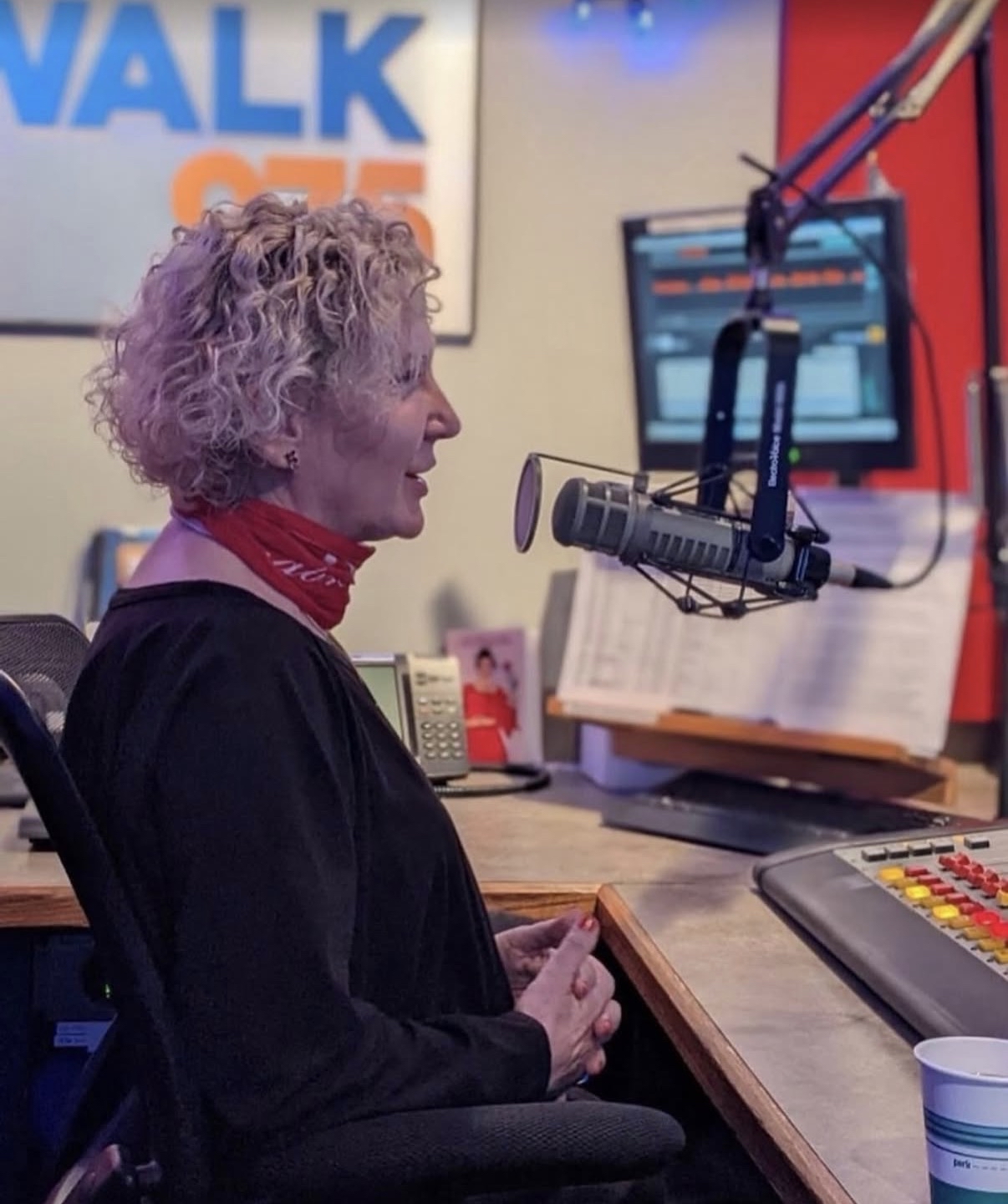
Talking with Dr. Tanovic: Breast Augmentation
(audioboom.com)
Choosing a Breast Augmentation Surgeon in NYC
For patients considering a breast implant in New York, careful planning begins with understanding their anatomy, goals, and the differences between available implant options. Breast augmentation planning is performed by Mahira Tanovic, MD, FACS, a board-certified plastic surgeon who reviews implant choices, tissue coverage, safety considerations, and recovery expectations before surgery is recommended.
Patients searching for the best plastic surgeon in NYC for breast augmentation should look beyond online rankings and focus on board certification, experience in breast surgery, patient safety, and personalized treatment planning. Choosing the right surgeon also means finding someone who carefully evaluates your anatomy, explains implant options and potential risks, and sets realistic expectations for your results. Dr. Mahira Tanovic, MD, FACS, emphasizes individualized surgical planning and informed decision-making for patients considering breast augmentation in Manhattan, NYC, and Long Island.
Silicone vs. Saline Breast Implants in NYC
Patients comparing breast implants in New York typically consider silicone and saline options along with implant size, profile, tissue coverage, placement, and the desired feel. Both implant types have a silicone shell, but they differ in fill material, feel, incision considerations, monitoring, and how rupture may be detected. Saline implants are filled with sterile saltwater, while silicone implants contain silicone gel.FDA-approved saline implants are available for cosmetic breast augmentation in patients 18 and older, while silicone gel implants are approved for patients 22 and older. Approval by age does not determine which option is best for a particular anatomy.
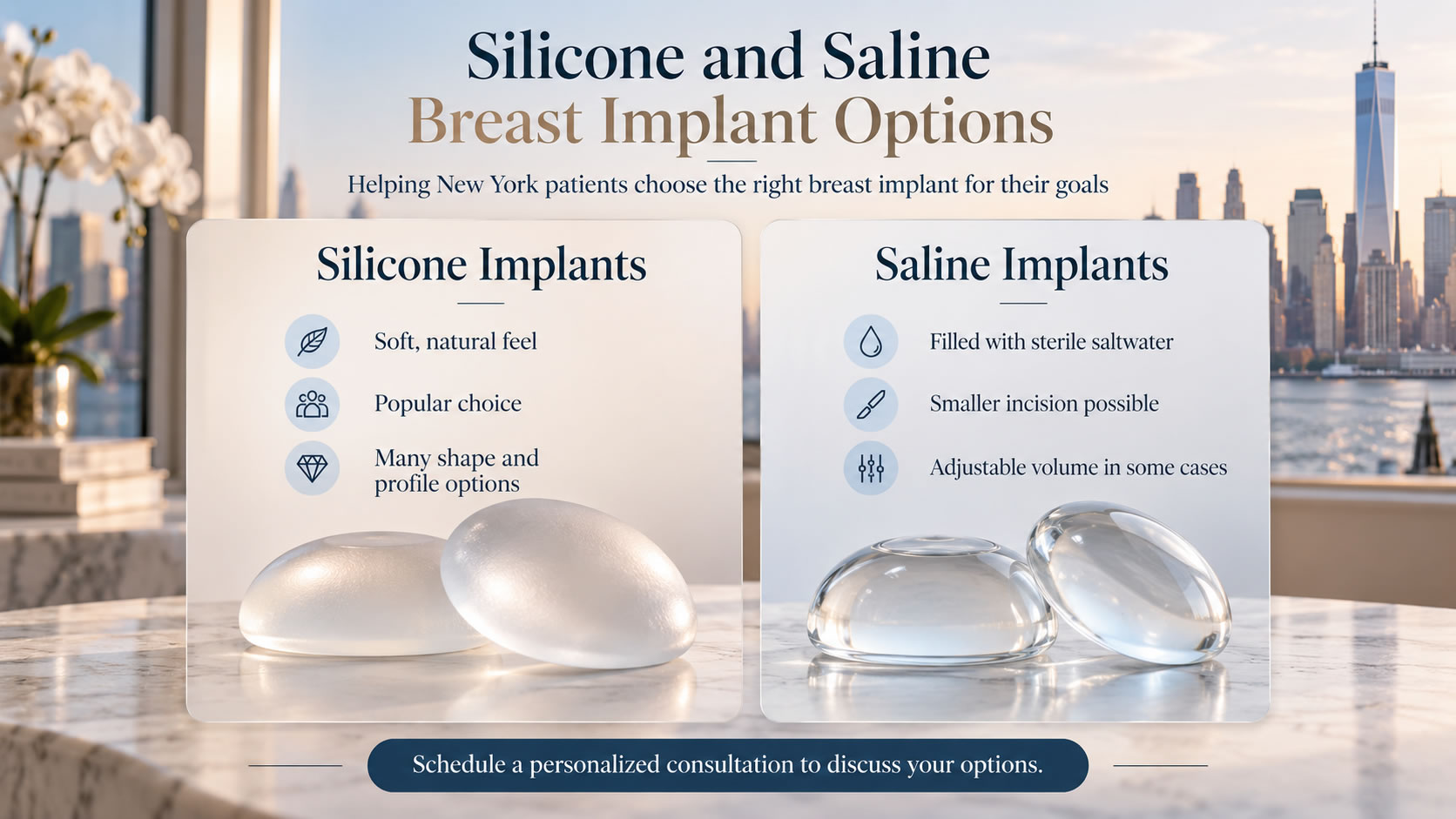
| Consideration | Silicone gel |
Saline
|
|---|---|---|
| Fill | Cohesive silicone gel inside a silicone shell |
Sterile saltwater inside a silicone shell
|
| Feel and rippling | Often selected for a softer feel; rippling can still occur |
May feel firmer and show more rippling in patients with limited tissue coverage
|
| If the implant fails | Rupture may be “silent” and require ultrasound or MRI to detect |
Deflation is usually visible as the saline is absorbed by the body
|
| FDA age for cosmetic augmentation | 22 and older |
18 and older
|
Patients asking about silicone breast implants in NYC or saline options should receive the manufacturer’s current patient labeling and decision checklist before surgery. The choice should account for anatomy, tissue thickness, desired feel, incision plan, monitoring expectations, and patient preference—not a single generalized claim that one implant is best.
Breast Surgery Safety and Informed Decision-Making
Every breast procedure has potential benefits, limitations, and risks. During consultation, the recommended surgical approach, anesthesia, incisions, expected recovery, potential complications, and realistic outcomes should be discussed before a patient decides whether to proceed.
For implant-based procedures
Breast implants are not considered lifetime devices, and patients may require additional surgery in the future. Implant-specific benefits, risks, surveillance recommendations, and FDA patient information should be reviewed as part of the decision-making process.
Learn More About Breast Implant Safety → FDA
Implant width should relate to the breast base and chest wall. Profile describes how far an implant projects for a given width, while volume is measured in cubic centimeters. Round implants can provide different degrees of fullness depending on their dimensions and placement; shaped devices, when offered, have additional rotation and surface considerations.
Bra cup size is not standardized across brands, so it is not a precise surgical measurement. A safer, more useful conversation combines measurements, sizing, photographs, and a clear description of the desired silhouette.
Existing tissue, skin quality, chest-muscle activity, exercise habits, implant dimensions, and the risk of visibility or rippling all influence pocket choice. Each position has tradeoffs; there is no single placement that is ideal for every patient.
An inframammary incision is placed in or near the fold beneath the breast. A periareolar incision follows part of the border of the areola. A transaxillary incision is placed in the armpit and may be considered for selected patients when the surgeon performs that approach.
Implant type, pocket position, anatomy, future access, scar preference, and surgeon experience guide the choice. All incisions create scars; the goal is a well-planned scar in a location appropriate for the selected technique.
Natural-Looking Breast Augmentation in New York
A natural-looking breast augmentation result comes from matching implant width and profile to the chest, providing appropriate tissue coverage, respecting skin elasticity, and choosing a degree of fullness that fits the patient’s proportions and preferences.
Larger implants place greater demands on skin and soft tissue and may increase visibility, rippling, or long-term stretching in some patients. Dr. Tanovic uses measurements and a direct discussion of tradeoffs to define a range that supports the desired look while remaining compatible with the patient’s anatomy.
The goal is not to choose an implant in isolation. It is to create a breast shape that is proportionate to the patient’s body, preferences, and long-term plans.
– Practice philosophy for individualized planning –
Your Breast Augmentation Procedure: Four Steps
Questions to Ask Your Breast Augmentation Surgeon in New York
Your consultation with Dr. Mahira Tanovic is an opportunity to discuss your expectations, explore your options, and better understand what breast augmentation may involve. Preparing a few questions in advance can help you feel more comfortable, make informed decisions, and get the most out of your appointment.
The following questions cover three important aspects of breast augmentation: choosing the right implants, understanding the procedure, and preparing for recovery.
Make the Most of Your Consultation
Every patient’s anatomy, expectations, and surgical goals are different. There are no wrong questions when considering breast augmentation, and you should feel comfortable discussing anything that matters to you.
Consider saving these questions on your phone or bringing a written list to your appointment. An open conversation with Dr. Tanovic can help you better understand your options and make a decision that feels right for you.
Breast Augmentation Recovery: What to Expect
Early appearance is not final. Swelling, implant position, scar maturation, aging, pregnancy, and weight changes all influence long-term results. These symptoms gradually improve as the breasts heal and the implants begin to settle into a more natural position.
During the early stages of breast augmentation recovery, patients are typically advised to rest, wear a supportive surgical bra as directed, and avoid strenuous exercise, heavy lifting, and activities that place unnecessary pressure on the chest. Many patients are able to return to light daily activities and desk-based work relatively soon, although the timing depends on the individual, the surgical technique, and the recommendations of their plastic surgeon.
Swelling may continue to decrease over several weeks, and the appearance of the breasts will continue to evolve as healing progresses. Following all postoperative instructions and attending scheduled follow-up appointments are important parts of achieving a safe recovery and the best possible result after breast augmentation surgery.
Your plastic surgeon will provide personalized guidance about when you can return to exercise, work, driving, sleeping positions, and other normal activities.
Breast Augmentation Results, Scars, and Long-Term Change
The increase in volume is visible immediately, but early appearance is not the final result. Swelling, muscle tightness, and implant position can make the breasts look high, firm, or uneven during the first weeks. The tissues generally soften and settle over several months, with timing that differs between sides and between patients.
Scars may be red, raised, itchy, or firm early in healing. They usually soften and fade over many months, but no incision becomes completely invisible. Genetics, nicotine, infection, tension, sun exposure, and individual healing influence scar quality; use only the scar treatments and timing recommended by the practice.
Results can last for years, yet breasts continue to change with aging, gravity, pregnancy, breastfeeding, weight fluctuation, hormones, skin elasticity, and implant-related factors. Implants do not prevent future sagging and do not create permanent symmetry.
Breast Augmentation Before and After Photos in New York
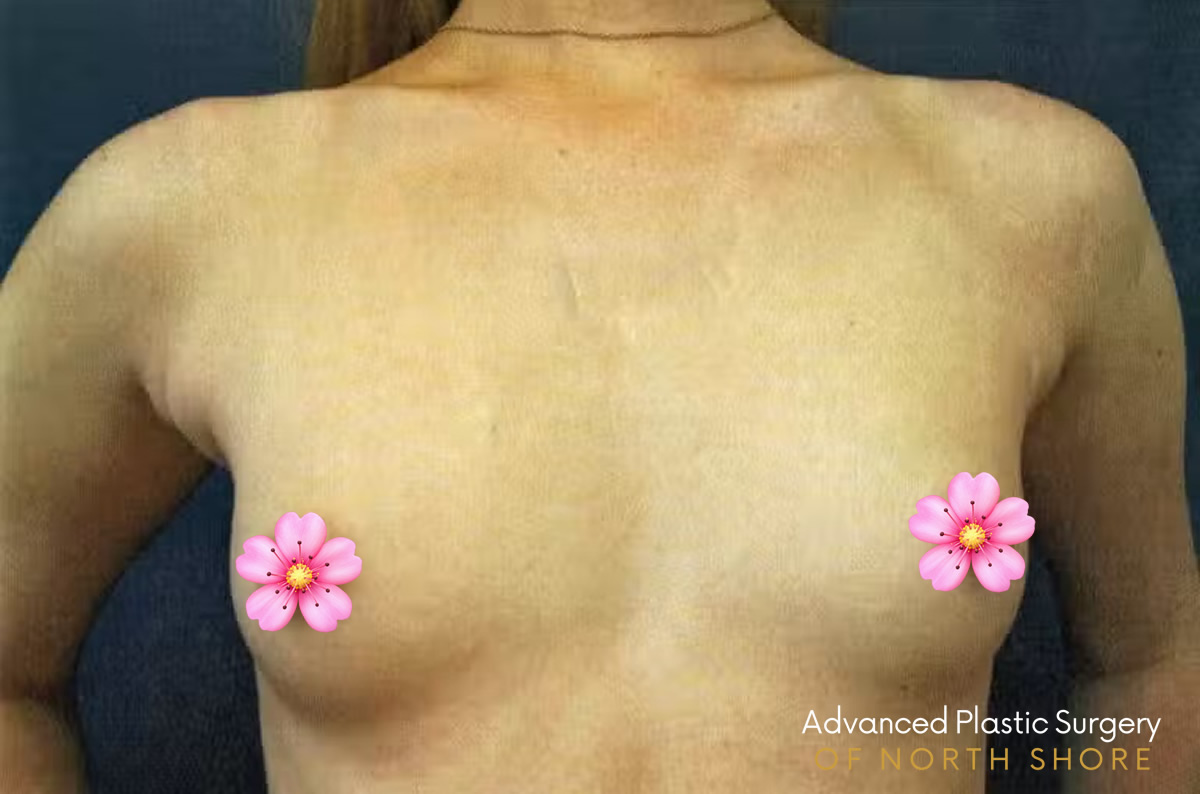
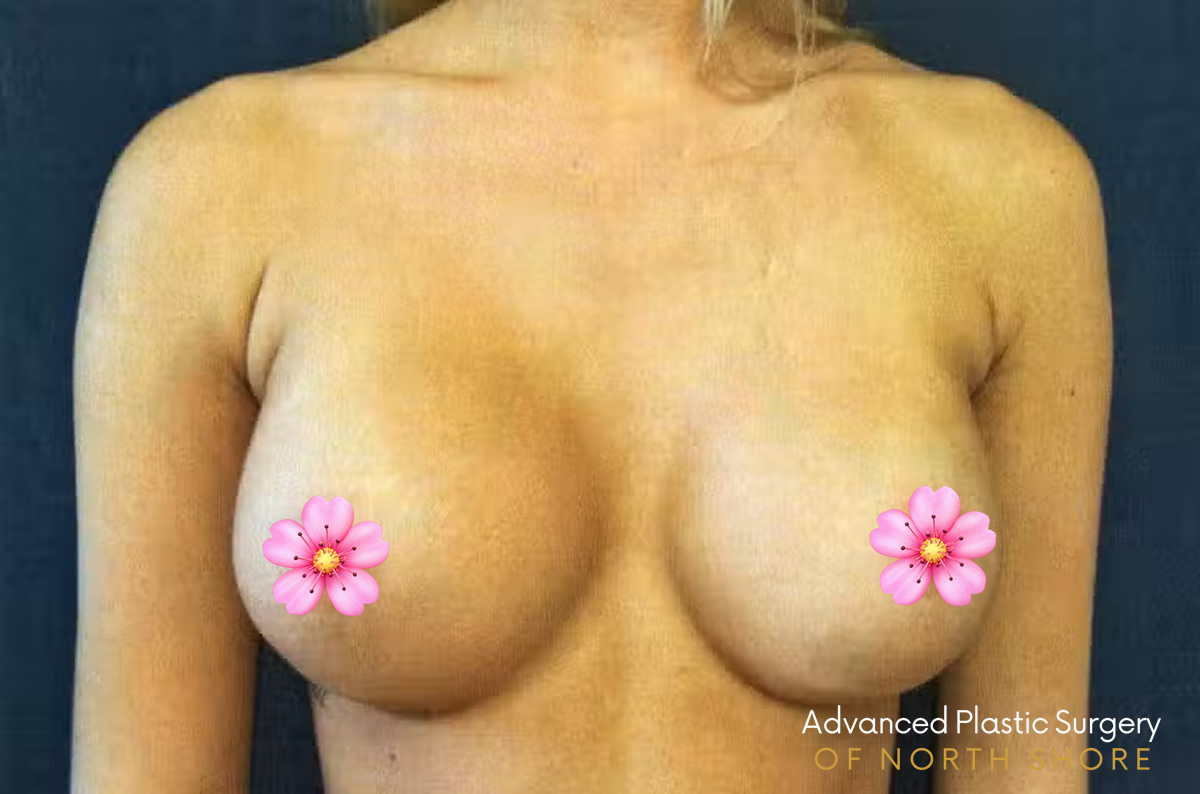
Breast augmentation
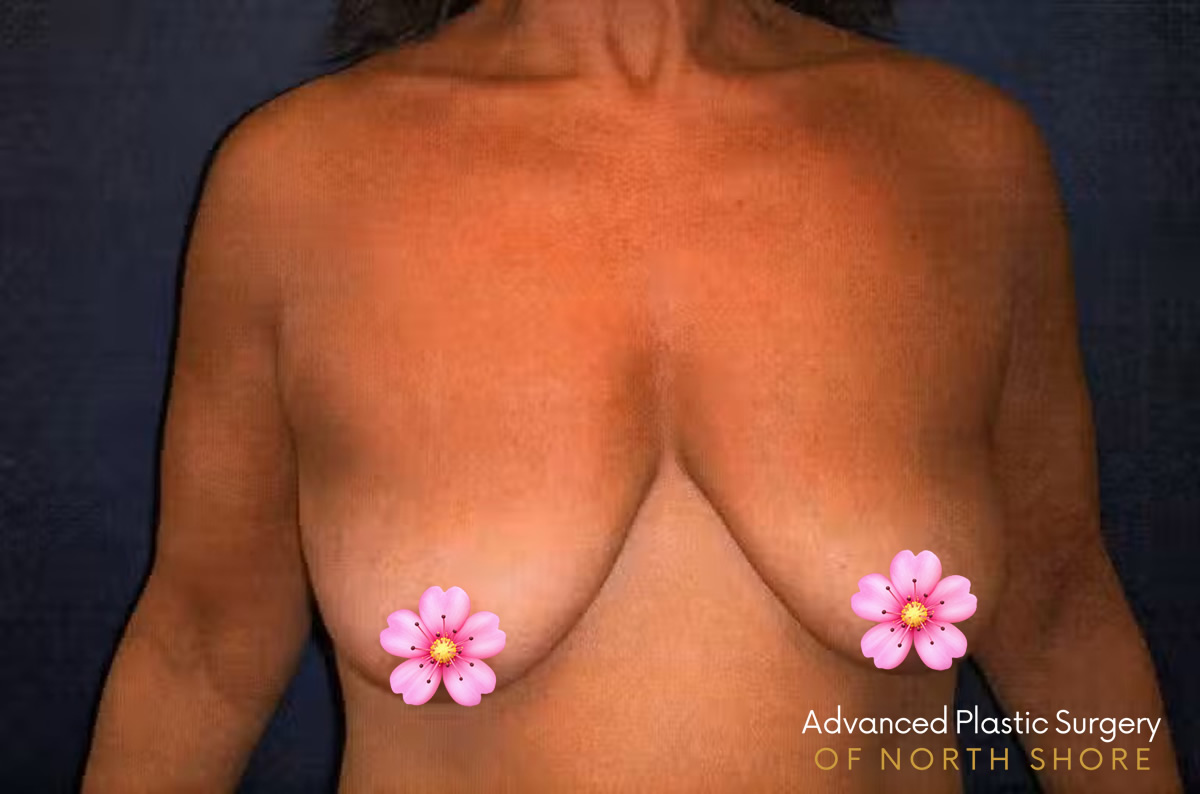
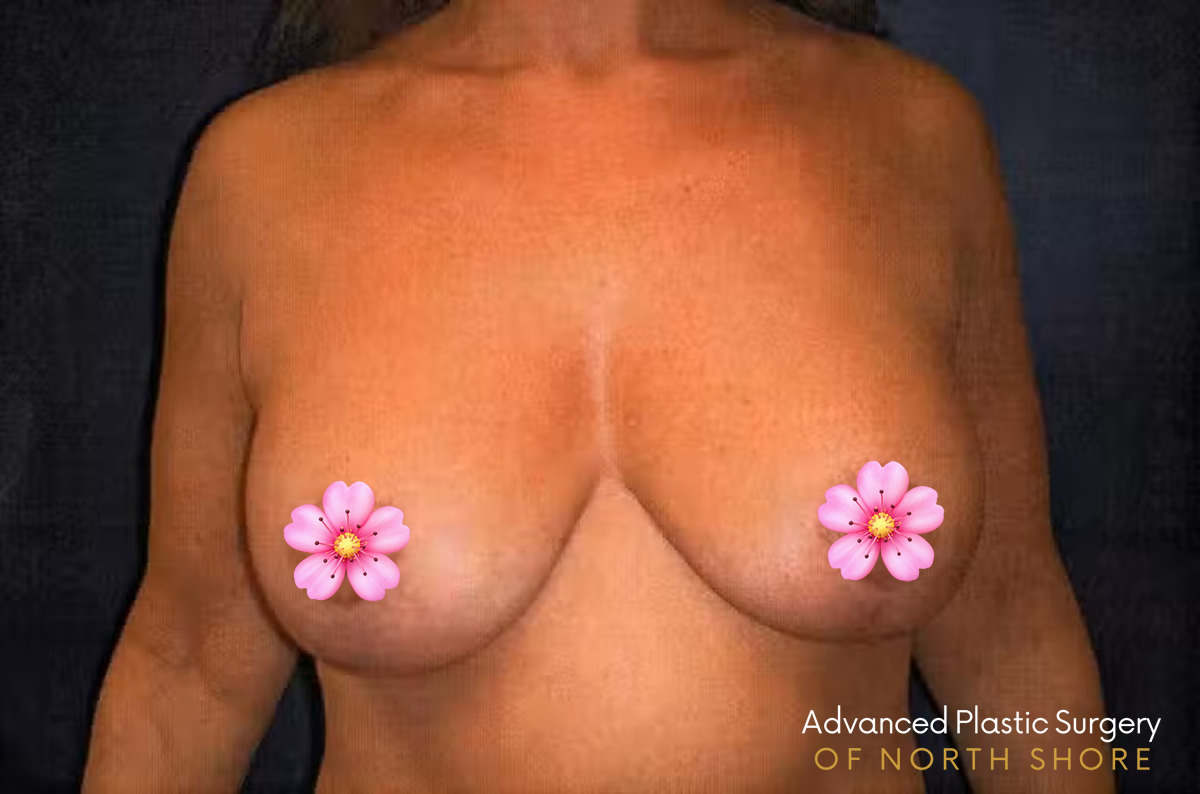
Breast augmentation
Potential Risks and Complications of Breast Augmentation
Breast augmentation is elective surgery and should include discussion of short-term surgical risks, implant-related issues, and rare but serious safety concerns. Your consultation and manufacturer-specific patient decision checklist should explain both common concerns and uncommon serious events. No outcome, cup size, symmetry, scar quality, sensation, or implant lifespan can be guaranteed.
- Bleeding, hematoma, infection, fluid collection, or delayed wound healing
- Unfavorable or widened scars
- Temporary or permanent changes in nipple or breast sensation
- Persistent pain, asymmetry, rippling, implant visibility, or dissatisfaction with size or shape
- Capsular contracture, in which the scar capsule tightens around an implant
- Implant malposition, rotation, deflation, leakage, or rupture
- Possible interference with breastfeeding or the need for specialized mammography views
- Need for revision, removal, or replacement surgery in the future
- Anesthesia-related complications
- Rare implant-capsule malignancies, including BIA-ALCL and reported BIA-SCC
When to call after surgery
Contact the practice promptly for fever, increasing redness or warmth, drainage, wound separation, sudden one-sided swelling, severe or worsening pain, a new shape change, or medication concerns. Seek emergency care for chest pain, shortness of breath, fainting, severe bleeding, or another potentially life-threatening symptom. Your written postoperative instructions should include the correct after-hours contact pathway. Contact Our Practices
Breast Augmentation Cost in NYC and New York
Breast augmentation cost in NYC varies based on implant type, surgical technique, anesthesia, facility fees, and whether augmentation is performed alone or combined with another breast procedure. Because each surgical plan is individualized, the most accurate price is provided after an in-person consultation and examination.
Your written quote should clearly identify what is included, such as the surgeon, implants, anesthesia, facility, routine postoperative visits, and garments, as well as potential separate expenses. Cosmetic augmentation is generally not covered by health insurance. The practice can explain current payment and financing options; approval and terms come from the financing provider and cannot be guaranteed.
Combining Breast Augmentation With Other Procedures
Augmentation may be combined with a breast lift when a patient wants both added volume and meaningful correction of sagging or nipple position. Selected asymmetry procedures can also be planned at the same time. Combining procedures may lengthen surgery, add scars, change recovery, and increase risk, so the benefit must justify the additional treatment.
In some cases, staging is safer or makes the result more predictable—particularly when tissue is thin, the amount of lifting is substantial, or the desired change places competing demands on the skin. Dr. Tanovic determines whether augmentation alone, a combined operation, or separate stages best match the anatomy and goals.
Related procedures / Long-term care:
Frequently Asked Questions About Breast Augmentation
These answers are general education. A consultation is needed for implant dimensions, placement, incision choice, safety, and recovery recommendations.
The best implant is selected by dimensions, not by a cup-size request alone. Dr. Tanovic considers chest width, existing breast tissue, skin stretch, implant width and projection, asymmetry, and the look you want. In-office sizing and clinical photographs can help translate a visual goal into a proportionate surgical plan.
Most patients describe early tightness, pressure, muscle soreness, and incision tenderness rather than one uniform level of pain. Discomfort is often greatest in the first few days and then improves. Placement beneath the chest muscle may cause more early muscle soreness, but individual experiences vary.
Many patients can return to non-physical work in about five to seven days, but this is only a general estimate. Light activity increases gradually, while heavy lifting, running, and chest exercise often wait four to six weeks or longer. Your job, implant placement, combined procedures, and healing response all affect timing.
Some patients breastfeed successfully after augmentation, while others cannot. The operation may affect milk ducts, nerves, or breast tissue, and breastfeeding can never be guaranteed even without prior surgery. Discuss future pregnancy and breastfeeding plans before choosing an incision and surgical approach.
Breast implants are not lifetime devices, but they also do not require automatic replacement on a fixed anniversary. Some remain satisfactory for many years; others require earlier revision because of rupture, capsular contracture, position change, symptoms, or a patient’s changing goals. Long-term follow-up matters.
A natural-looking result depends on how implant width and projection relate to your chest, the amount of tissue covering the implant, skin elasticity, pocket position, and your preferred degree of fullness. The goal is a proportionate result that fits your anatomy—not the largest implant that can be placed.
Augmentation can improve some size and shape differences by using different implant dimensions or different planning on each side. A lift, tissue reshaping, or a staged plan may be more appropriate when nipple level, skin excess, or breast position also differs. Improvement is realistic; perfect symmetry is not.
Walking is encouraged early, but vigorous activity and upper-body loading should wait. Many patients begin low-impact exercise within a few weeks and progress toward strenuous activity around four to six weeks, only after surgeon clearance. Submuscular placement, healing concerns, or combined surgery may lengthen the restriction.
Future surgery is possible and should be part of your decision. Revision may be needed for rupture, contracture, displacement, breast changes, symptoms, or a preference to change or remove implants. No surgeon can predict exactly whether or when revision will become necessary.
The FDA recommends ultrasound or MRI beginning five to six years after silicone implant placement and every two to three years afterward, even without symptoms. Imaging for implant integrity is separate from routine breast-cancer screening. Your radiology team should always know that you have implants.
Confirm board certification in plastic surgery, review experience with breast procedures, ask where surgery is performed, and discuss complication and follow-up protocols. A good consultation should include measurements, implant-specific safety information, realistic alternatives, and enough time for questions without pressure to decide.
Choosing the right breast augmentation surgeon in NYC should involve more than comparing photos or looking for the largest number of online reviews. Consider whether the surgeon is board-certified in plastic surgery, has specific experience performing breast procedures, operates in accredited surgical facilities, and takes the time to explain implant options, potential risks, recovery, and realistic outcomes. Reviewing before-and-after photos and choosing a surgeon whose approach matches your goals can also help you make a more informed decision. A personal consultation is often the best way to determine whether you feel comfortable with the surgeon’s recommendations, communication style, and approach to your care.
Breast augmentation is the surgical procedure used to increase or restore breast volume, while breast implants are one of the tools that may be used to achieve that result. Breast implants are available in different sizes, shapes, profiles, and materials, including silicone and saline. During a breast augmentation consultation in New York, Dr. Tanovic evaluates your anatomy, tissue coverage, proportions, and aesthetic goals to help determine which implant option and surgical approach may be most appropriate for you.
This is what a ruptured implant looks like!
ALWAYS listen to your body. Ruptured implants may give very slight or vague symptoms, or can even result in tremendous pain. Everyone and every case is different.
Some general symptoms include but are not limited to: pain, burning, discomfort, stiffness/hardness, change in size/shape/feeling, muscle aches, general feeling of fatigue, achiness, etc.
The procedure includes removal of the implants and their capsules, and a very very throrough wash out of all the silicone to ensure that nothing remains behind.
Again, everyone is different! Patients usually know when something is wrong or when something is out of the ordinary. If you have your suspicions, remember that YOU know your body best and it doesn’t hurt to get your concerns checked out!
The cost of breast augmentation in NYC varies depending on the type of breast implants selected, the surgical approach, anesthesia, facility fees, and whether breast augmentation is performed alone or combined with another procedure, such as a breast lift. Because every patient’s anatomy and treatment plan are different, an exact cost can only be provided after a personalized consultation. During your visit, Dr. Mahira Tanovic will review your goals, discuss the available options, and provide a clear estimate based on your individual surgical plan.
Choosing the right breast implant in New York should be based on your anatomy rather than cup size alone. Implant width, projection, fill material, tissue coverage, chest dimensions, and the amount of fullness you want all influence the decision. During your consultation, Dr. Tanovic can compare implant options and recommend a range that fits your proportions and goals.
Two convenient New York locations
Patients considering breast augmentation in NYC can schedule consultations at Dr. Tanovic’s Upper East Side Manhattan office or in New Hyde Park on Long Island. Consultations focus on breast anatomy, implant size and profile, placement options, recovery expectations, and the type of result the patient hopes to achieve.

Breast Augmentation in New Hyde Park, Long Island
For patients from Nassau County and surrounding Long Island communities, breast augmentation consultations are also available at the New Hyde Park office.
Office location
2500 Marcus Avenue
Suite 103
New Hyde Park, NY 11042
(516) 354-1330

Breast Augmentation in Manhattan and the Upper East Side, New York City
Patients considering breast augmentation in Manhattan can meet with Dr. Tanovic at her Upper East Side office at 110 E 82nd Street.
Office location
110 E 82nd St
New York, NY 10028
(212) 433-3133
Ready for an Individual Breast Augmentation Assessment?
Meet with Dr. Mahira Tanovic, one of New York’s experienced board-certified breast plastic surgeons, to discuss your anatomy, implant options, recovery needs, and long-term goals. A consultation gives you room to ask questions and decide without pressure.